Tuesday, June 17, 2008
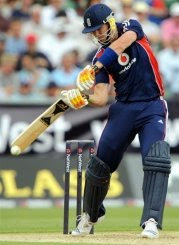
Pietersen allowed to carry on reversing

The ICC's umpire review system, 'On-field umpires should be respected' - Jayawardene
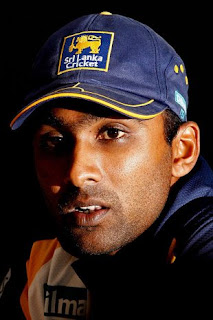
Mahela Jayawardene, the Sri Lanka captain, feels that the new umpire decision review system that will be implemented on a trial basis during the home Test series against India next month should be utilized in a manner that shows respect to the on-field umpires.

Jayawardene said he welcomed the trial but admitted that it would place more responsibility on the captains.
"In general, the system will be good for the game as it will reduce the scope for mistakes," Jayawardene told Cricinfo. "But you need to do it in a respectful way. The on-field umpires are human, after all. They do make mistakes, just as everybody else does, and we should respect that during the trial. We should be clear that the idea is only to reduce the mistakes."
Jayawardene revealed that his team would be holding extensive discussions prior to the series on how to utilise the system in the "best manner possible". "We will take the views of everybody on what is best for the team. We want to keep it simple and not make it into a complicated issue."
He dismissed suggestions that the system would mean extra pressure on the captain, but admitted that it will bring in added responsibility. "It seems so. Especially because you have three chances and the captain takes the call for the fielding side. But while batting, others share the responsibility - it's the batsman who has to take the call and maybe, he can consult his partner before doing so."
David Richardson, the ICC's acting chief executive, said that the decision to trial the system during India's visit to Sri Lanka is "an attempt by the ICC to enhance still further the game at the international level".
"The system will see the fielding and batting side allowed three unsuccessful appeals to the umpire per innings to change a decision if it is perceived to have been incorrect," the ICC said in a press release. "These appeals can be made only by the batsman in receipt of the umpire's original decision or the captain of the fielding side, in both cases by the player making a 'T' sign with both forearms at shoulder height.
"The on-field umpire will consult with the third umpire, who will review available television coverage of the incident before relaying fact-based information back to his colleague. The on-field umpire will then deliver his decision either by raising his finger to indicate "out" or by crossing his hands in a horizontal position side to side in front and above his waist three times - as per a "safe" decision by an official in baseball."
The BCCI said on Monday that it has agreed to implement the trial for the three-Test series from July 23 to August 12.
source: www.Cricinfo.com
Saturday, June 14, 2008
Shoaib's ban reduced to 18 months
The tribunal was hearing an appeal from Shoaib against the five-year ban slapped on him by the disciplinary committee of the PCB in March. The verdict was delivered in Lahore on Saturday.
He was allowed to play in the Indian Premier League after the tribunal suspended his ban for one month.

The 'Rawalpindi Express' was earlier banned for five years for violating code of conduct while under probation period.
Last year, Shoaib was banned for 13 international matches and fined Rs. 3.4 million ($120,300) for four breaches of discipline including striking team mate Mohammad Asif with a bat before Twenty20 World Cup in South Africa and put on two-year probation.
Friday, June 13, 2008
IPL outshone Sydney Olympics: Gilchrist
Retired Australian stumper Adam Gilchrist is still awestruck by the glitz and glamour of the inaugural Indian Premier League and feels it outshone even the Sydney Olympic Games."It was quite overwhelming to see an event capture the attention and mindset and imagination of a country quite like it," Gilchrist said.
IPL: Who did well, and who didn't
"The only thing I can think of that was comparable was maybe the Olympics when they were in Sydney. But the Olympics was about two weeks, this was 45 days every night," he was quoted as saying by The Australian.
Memorable moments from the IPL
"It felt like that at 8pm the whole country would tune in no matter what the game was or who was playing. It was front page of the papers pretty much every day," said Gilchrist, who donned the Deccan Chargers' jersey in the tournament.
"As much as the concept and the tournament was successful, that passion for cricket in India grows more and more. The whole concept will be looked back on as a landmark in the history of cricket," added the star stumper-batsman.
His former skipper, Ricky Ponting , though fears the easy moolah in IPL might just lure next generation cricketers away from national duty.
"I've always been a little bit worried that if money keeps growing and growing and growing in that version of the game then all of a sudden young kids who are 14, 15, 16 now and want to make cricket their career may not even consider playing for their countries," Ponting told the newspaper.
"They might be trying to get a crack at the IPL or a competition somewhere like that and hopefully make a name for themselves and totally turn their back on the international game. That's what I'm worried about," he said.
Asif's case to be heard on June 22
Yuvraj Singh to be chief guest at Euro match
Fri, 13 Jun 2008, Indian cricketer Yuvraj Singh will present the man of the match award at the Euro 2008 match between Switzerland and Portugal in Basel on Sunday, a sponsor said. Friday, June 6, 2008
Sreesanth doubtful for Bangladesh trip
June 6, 2008, A left side strain leaves Sreesanth, the Indian fast bowler, in doubt for the Kitply Cup in Bangladesh, which starts on June 8. Sreesanth was expected to join the team on Saturday, ahead of their departure for Bangladesh on Sunday, but has instead been told to report to the medical team at the National Cricket Academy (NCA) in Bangalore. Sreesanth featured in all 15 of Punjab's matches in the IPL, and finished with 19 wickets in the tournament, making him joint-second on the leading wicket-takers' chart with Shane Warne, and three behind Sohail Tanvir's 22.
Sreesanth had been at the centre of a controversy during the inaugural edition of the Twenty20 league, having been slapped by his India team-mate Harbhajan Singh after the match between Punjab and the Mumbai Indians in Mohali. Harbhajan was barred from taking further part in the tournament, and the BCCI banned him for five ODIs, while Sreesanth was asked to improve his on-field behaviour.
India play their first match of the tournament, a preparatory event ahead of the Asia Cup later this month, against Pakistan on June 10. No standby had been named in the squad for the tri-series, also involving hosts Bangladesh, and the Asia Cup, but with four other fast bowlers in RP Singh, Ishant Sharma, Praveen Kumar and Irfan Pathan, a replacement might not be necessary.
ICC considers repackaging Tests
June 6, 2008, IS Bindra: "The ICC was looking at ways to increase scoring-rates [in Tests"It does not mean tinkering with the form but we are looking to bringing in more audience in Test matches." Bindra, a former president of the BCCI, declined to reveal the measures being considered but said the "the ICC was looking at ways to increase scoring-rates [and] have a world championship of Test cricket."
Source © Cricinfo
Asif hearing deferred to Sunday

Source: © Cricinfo
Thursday, June 5, 2008
Sohail Khan replaces Asif in tri-series squad
June 4, 2008, Sohail Khan has replaced Mohammad Asif in Pakistan's 16-man squad for the upcoming tri-series in Bangladesh, which will involve the hosts and India. The series is due to begin from June 8.Asif was originally selected in the squad on Sunday, the very day he was detained at Dubai airport for suspected possession of an illegal item. It is unlikely now that Asif will be back in time to play in the tournament. Selectors told Cricinfo that they were not aware of Asif's situation when they picked the squad.
Khan has had an impressive first-class season, picking up a Pakistan record 91 wickets in his debut year and he has impressed many with his pace and stamina. He was rewarded for his efforts with an international call-up against Zimbabwe earlier this year in an ODI series. In three ODIs so far, he has picked up four wickets, with a best of 3 for 30 against Bangladesh.
He wasn't part of the original squad because selectors felt that Wahab Riaz's left-arm provided a more seasoned limited-overs option. Khan spent a week at a fast bowlers' camp in Lahore under the eye of Wasim Akram, where it was widely felt that despite his undoubted promise, there were still areas he needed to work on. Outside of his bowling, his poor fielding is considered a serious concern within the selection committee.
The Pakistan squad leaves for Dhaka on June 5.
Source: Cricinfo staff
Tuesday, June 3, 2008
Mohammad Asif held in Dubai
Mohammad Asif, the Pakistan fast bowler, has been detained by authorities in Dubai on suspicion of possessing drugs. The fast bowler, who tested positive for the banned steroid nandrolone nearly two years ago, was held back by airport authorities on Sunday. According to a PCB official already in Dubai, no charges have yet
been brought against Asif, though he remains in the detention centre at Dubai International Airport. Akram also stressed that Asif hadn't yet been arrested and that he had been detained. "No charges have been brought yet. We have a lawyer here and he is due to meet the public prosecutor at 12.30pm Dubai time. We will know more about the case after their meeting."
Source: © Cricinfo Cricinfo staff
Sunday, June 1, 2008
Indian cricket bonanza is massive hit
By Soutik Biswas BBC News, MumbaiThe great Indian summer blockbuster has ended with a nail biting climax.
In many ways, Sunday night's final of the Indian Premier League (IPL), cricket's most expensive and hyped carnival, mirrored vintage Bollywood fare.
An unfancied, cut price team (Rajasthan), led by an ageing, semi-retired spin bowling wizard (Shane Warne), beat a pricey, aggressive rival (Chennai), led by one of the highest paid players in the game and Indian cricket's poster boy (MS Dhoni).
It was the triumph of the underdog over the rich and resourceful and it went down to the wire (a last-ball win).
And like in those films, some high-wire entertainment preceded and interspersed the serious business of cricket.
Kinetic kitsch
Starlets gyrated in various costumes to showcase "various cultures of India". Fire dancers, acrobats, contortionists, and guitarists and violinists gave the show a 'global' feel. The pyrotechnics were spectacular.
The entertainment was Indiana Jones meets home-grown kinetic kitsch. The packed stadium clapped and danced when brawny star Salman Khan took the stage and gyrated a little more.That the match happened on a sticky evening in the western city of Mumbai, home to Bollywood, is no coincidence.
Nor is the fact that that cricket and Bollywood, India's biggest obsessions, fused seamlessly in the competition – two of the teams are owned by Bollywood stars who routinely cheer their players from the dugouts, and Bollywood remixes and dances dominate on-field entertainment.
It's an irresistible combination and a resounding hit, dismaying the pundit and the purist.
The competition has all the trappings of what Indians call a "tamasha" or an entertainment show, or a "timepass", a way to have good, cheap fun to liven up their stressed lives.Of course, a lot of cricket has been played as well, and some of it has been very entertaining.
Eight teams, 44 days and 59 matches have yielded nearly 18,000 runs from a group of top international cricketers and promising local cricketers, all bought in an unique open auction.
Nearly 60% of the runs came off fours and sixes, offering value for money to the cricket-mad Indians who faithfully succumbed to the temptations of a daily evening fix of speed cricket on television.
"It's all a blur now. Will people remember any memorable moments as the season ends, the way they remember classic Test matches?," wonders cricket historian Ram Guha.
But can purists afford to ignore this competition?
For one, IPL has offered excitement aplenty: there were seven victories where the winners scraped through by a margin of anything between one and nine runs; up to nearly 450 runs were scored between two teams during a single game; and in an early game, a batsman smashed 16 sixes during his stay at the crease.
Although one bowler was hit for 20 sixes through the competition, three others, including a South African, achieved hat tricks or mopping up three wickets in a row.On the margins and off the field there was abundant action as well.
A police officer accused a high profile team owner of abusing him, two black cheerleading girls charged an event manager with racism and banishing them from a game, an inebriated Indian cricketer playing in the competition beat up a man in his hometown.
One team owner, known for his flamboyant ways, sacked his chief operating officer midway through the tournament because of his team's plummeting fortunes.
What more could you want from a tournament?
How else can you explain an low profile and cheapest ($67m) team like Rajasthan, led and coached by 38-year-old Shane Warne, rising above the hoopla to emerge as the best team of the competition?How do you explain the law of diminishing returns taking over the most expensive teams, Mumbai ($111.9m, lost half of their 14 games) and Bangalore ($111.6m, lost 10 of 14 games)?
Both teams are owned by India's top businessmen, who have seldom experienced any failure, but the IPL has also been a great leveller.
Otherwise, how do you explain the crashing out of the Calcutta team (lost half of their 14 games) owned by India's biggest brand and superstar Shah Rukh Khan?
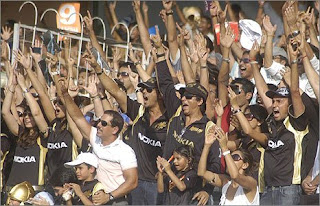
Khan partied with his cricketers, sent them inspirational text messages, cheered lustily from the dugouts, bought his film friends to dance in the stands, and tied up neat branding deals with companies.
Despite a growing pan-Indian support - his fans began supporting Calcutta because he owned the team - his players let him down.
Changed game
So has the IPL come to stay?
By all accounts yes, going by the resounding thumbs up it seems to have received from players (because of the money) and fans (because of the entertainment).
Will it be equally successful if replicated in other cricket playing countries?
That is difficult to say, going by the lukewarm response to the competition outside South Asia.
But what is clear is that the competition could change cricket since India is now international cricket's financial capital.
So much so that the usually taciturn and reserved Indian Test captain, Anil Kumble, is also singing hosannas in the competition's praise.
"[This is] an event that is likely to rewrite cricketing history," he says.
"I'm not sure whether the game will ever be the same again after the IPL."
Source: http://news.bbc.co.uk/1/hi/world/south_asia/7430529.stm
Rajasthan win first IPL cricket series
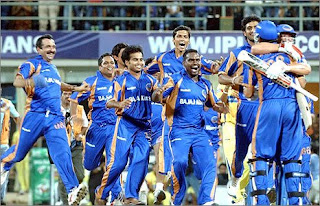
Shane Warne's Rajasthan Royals have won the first series of the Indian Premier League Twenty-20 cricket.Pakistani all-rounder Sohail Tanvir hit the winning run off the final ball of the game.Rajasthan's Yusuf Pathan earned the man of the match award for his hard-hitting 56 that laid the foundation for the Royals to overtake the Chennai Super Kings total of 163.Source: http://www.radioaustralia.net.au/news/stories/200806/s2261927.htm?tab=sport
Can Chennai halt Rajasthan's juggernaut?

After thumping the Delhi Daredevils to take their deserved place in the final, Shane Warne had appeared quite indifferent when he was asked which team he would prefer to face. There was little doubt though that he expected it to be Kings
XI Punjab. After all,
of all the teams in the IPL, they had been most adept at absorbing pressure. The chase against Delhi in a game decided by Duckworth/Lewis had been timed to perfection, and they had also enjoyed a thrilling last-ball win against the Mumbai Indians.
But with Chennai reprising their early-season form, there was nothing majestic about the men from Punjab. With the stakes higher than ever, they took the pressure as well as a Coke can would a hobnailed boot. The established internationals like Yuvraj Singh and Mahela Jayawardene were the main culprits, and Dhoni could afford to stick to the tried-and-tested script after initially springing a surprise by throwing the new ball Muttiah Muralitharan's way.
It helped that his pace bowlers were absolutely outstanding. On a pitch that offered plenty of bounce, Makhaya Ntini was always going to be a factor, and so it proved. But it was Manpreet Gony, the son of Punjab in Chennai yellow, that took the vital wickets of Kumar Sangakkara and Yuvraj, bowling a maiden along the way. Throughout the tournament, his accuracy and consistency have been eye-catching, and in favourable conditions, he excelled by not getting carried away.
Gony and Ntini, supported splendidly by the ever-impressive Albie Morkel, will face their sternest test against a Rajasthan team that has already beaten them twice. Graeme Smith's muscular hitting may be missing, but in Kamran Akmal, Warne has a replacement who certainly doesn't lack flair or hitting ability. Shane Watson will be desperate to emphasise his most-valuable-player status in the game that matters most, while Swapnil Asnodkar and Niraj Patel will be encouraged to adapt the no-fear approach that has served them so well thus far.
The key to the contest will be Rajasthan's bowling, the most varied and effective in the competition. Sohail Tanvir has been the best new-ball bowler on view, while the heavy ball that Watson bowls was far too much for Delhi's star-studded batting to cope with. Siddharth Trivedi's changes of pace have been tough to get away, while Munaf Patel has eased back into the national reckoning with the accuracy that first caught the eye.
And then, there's Warne, the piper calling the tune. The rave reviews that his captaincy has earned have slightly obscured the fact that he also has 19 wickets for the tournament. On a helpful pitch, like the one he got in the semi-final, no one can rip a legbreak quite like he does. The straighter one has also fetched him wickets, as has the aura that appears to intimidate some batsmen even before they settle into the stance.
Both teams have got superb performances out of their Indian contingents. Suresh Raina, S Badrinath and the remodelled L Balaji have excelled for Chennai, while Warne has inspired top-drawer efforts from Ravindra Jadeja, Munaf, Trivedi and Asnodkar. Warne was insistent that it was the seven Indian players who were the real key to success. "You expect the four foreign guys to do a job," he said. "But it's the local players that can be the difference between winning and losing."
Dhoni, who has led India to victory at the World Twenty20 and in the CB Series, has had a charmed life as leader so far. But in Warne, he's up against perhaps the greatest big-match player there's ever been. It should be some contest.
Dileep Premachandran is an associate editor at Cricinfo
© Cricinfo
Cut-price Gony outshines pricey stars
Cricinfo staff May 31, 2008
When Ishant Sharma went for US$950,000 at the IPL auction in February, Manpreet Gony's name would have elicited a blank stare from most Indian cricket aficionados. You couldn't blame them either. In five first-class games, Gony had just 13 wickets, and there were no howls of protest when he was signed by the Chennai Super Kings rather than his home franchise, the Kings XI Punjab.
On Saturday night, with a global audience watching, he returned to silence the thousands that had been given Punjab flags to wave in the stands. He had finished the league stage with 14 wickets, twice what Ishant managed, but he saved his best for the biggest game that he's ever played in.
Mahendra Singh Dhoni had gambled by opening the bowling with Muttiah Muralitharan, but after a relatively tidy over, he sensed that pace was the key to settling the contest. With Makhaya Ntini back to his spring-heeled best at one end, Gony was unleashed from the Garware Pavilion End.
It took Gony just two balls to justify his captain's faith. When he moved one away from Kumar Sangakkara, there was little response from the Chennai fielders and only a half-hearted plea from his side. Astonishingly though, Sangakkara walked, as Adam Gilchrist had in a World Cup semi-final against Sri Lanka at Port Elizabeth five years ago.
In his next over, Gony landed the big fish. It was a short delivery and when Yuvraj got into position for the pull, Chennai fans must have feared the worst. Few hit the ball harder, and most eyes had already veered towards the rope by the time Murali stuck his hands out to take a blinder. At 28 for 3, the game was slip-sliding away from the men in red and grey.
When he next stepped up to the bowling crease, Gony came up with what must count as the T20 equivalent of a tiger sighting - the maiden over. And he wasn't bowling to some chump either. Irfan Pathan can wallop the ball a long way, but he couldn't even play it out of the circle as Gony bowled the perfect length at lively pace. And though Mahela Jayawardene finally tapped one behind point for four in his final over, the match had effectively been decidedly two balls earlier, when a catastrophic mix-up sent Pathan on his way.
Gony's delight as he whipped off the bails was palpable, and his spell a true reflection of the manner in which Chennai have revived their season after a really sticky patch. His 16 wickets are the second highest for an Indian fast bowler and it was no surprise that his name came up for consideration when the squad was being chosen for the tri-series in Bangladesh and the Asia Cup.
Compared to what he has gone through recently off the field, bowling six dot balls would have been a breeze. He and his wife lost their first child, a boy, 15 days after he was born. For him, the IPL hasn't just been a chance to stake his cricketing claim, but also an opportunity to move on. Jayawardene lost a younger brother to cancer when he was a star in the making, and has often spoken of how that traumatic experience helped him to treat what happened on the field with equanimity. The man who shredded his team's hopes tonight would probably be inclined to agree.
© Cricinfo
Losing the plot when it counts
Cricinfo staff May 31, 2008
![]() | ||
Kings XI Punjab had been the in-form batting unit of the tournament. Slogs and heaves are commonplace in the Twenty20 format, but Punjab's batsmen, especially Shaun Marsh, had used conventional strokes to bisect fields and take apart opposition attacks. However, when it mattered the most, Marsh was the biggest offender among a string of batsmen who chose the rash over the reliable.
Marsh was Man of the Match in five of his ten games, and Punjab sailed into second spot thanks primarily to the strong platform he laid at the top. However, with Marsh accumulating the runs, his more illustrious team-mates in the middle order hadn't faced much of a challenge in the tournament.
Tom Moody, their coach, had brushed aside those fears, confident his batsmen were in good nick. But the likes of Kumar Sangakkara, Yuvraj Singh and Mahela Jayawardene fell apart in the face of some hostile, accurate bowling by Makhaya Ntini and Manpreet Gony.
Pressure, athletes tell us, is something they thrive on. But adrenalin used wrongly can backfire. Just as the Delhi Daredevils batting order had crumbled the previous evening, Punjab lost the momentum early on and kept faltering. Ntini and Gony pitched it short and the Punjab batsmen, instead of trying to survive the early barrage, attempted ill-advised, expansive strokes.
James Hopes flailed unconvincingly at a wide one, handing an easy catch to the wicketkeeper. Marsh had already been surprised by Ntini's pace on the bouncer as a top-edged pull sailed for six, but didn't learn his lesson and played-on another sharp shorter delivery in Ntini's next over. Sangakkara was undone by a good outswinger from Gony but he had committed to go for a flashy drive and in the process offered the faintest of edges. All batsmen of class, but each one failing while trying to force the pace.
Moody later blamed the defeat on his batsmen, who he admitted suffered from nerves, to execute the plans. "It was the first time this has happened, the top order failing so badly," he said. "We faced a critical stumbling block today from which we could never recover."
Yuvraj was disconsolate and left the left the post-match presentation mid-way. For him the match was lost in the first phase. "We didn't do well under pressure. We lost too many wickets too quickly in the first 5-7 overs.
"We lost the main batsmen very quickly in the game, as a result we had no specialist batsmen left in the last 10 overs," Yuvraj said. "This is our worst game in the tournament. It hit us hard as in Twenty20 you don't get time to recover."
© Cricinfo
Saturday, May 31, 2008
IPLWatson helps Rajasthan march into final
Rajasthan Royals 192 for 9 (Watson 52, Yusuf 45, Maharoof 3-34) beat Delhi Daredevils 87 (Dilshan 33, Watson 3-10, Munaf 3-17) by 105
This was Shane Watson's match. Imposing himself on the first semi-final, he boosted Rajasthan Royals with an electric fifty before rattling Delhi Daredevils' top order with an outstanding opening spell. Shane Warne had complained about being deprived of home advantage but his side adjusted perfectly to the conditions at the Wankhede Stadium, putting on a show that illustrated exactly why they have been the stand-out team in the competition.
Delhi were like a side struck with stage fright. Their bowlers were rattled by a brand of unconventional strokeplay - even the peerless Glenn McGrath went wicketless for 38 runs - before their batsmen succumbed against a disciplined attack. Virender Sehwag's decision to field may come under scrutiny but Rajasthan's ruthless efficiency might have steered them to the final either way. The farcical end to the match - when Mohammad Asif took an age to get his bat into the crease - summed it up.
The scorecard may indicate a hopelessly one-sided contest but Rajasthan had their shaky moments. Losing the toss meant facing up to McGrath and Asif on a juicy pitch and three quick wickets for Farveez Maharoof pushed them from 65 for no loss to 76 for 3.
Graeme Smith, who was aided by a runner once his hamstring injury resurfaced, and Swapnil Asnodkar, who broke a window pane at fine leg with an audacious pull, provided the early impetus but the innings could have easily lost its way with Maharoof, utilising the bounce and movement on the surface, luring the top order into loose strokes.
Watson's arrival put the innings back on track. From the moment he took 21 off the 11th over, with two ferocious pulls for six, only one team bossed the contest. With the high, straight back-lift that's been the feature of his batting in the tournament, Watson swung through midwicket and square leg. He targeted specific bowlers and went through with shots even if he wasn't to the pitch of the ball, allowing the timing to take care of the rest.
Amit Mishra, the legspinner, teased with his flight and loop but Watson was intent on spoiling his rhythm - going down on one knee, he slog-swept him over midwicket, a technique that Yusuf Pathan was to pick up later.
Such a commanding total wouldn't have been possible without the final flourish. Yusuf celebrated his recall to the one-day squad with a blistering 21-ball 45, an innings where four mighty sixes dripped off his bat. Without the Watson back-lift, without too much initial movement, he showed what brute force could do, blasting over long-on and midwicket. He spotted slower balls too, smearing McGrath over midwicket for the shot of the evening.
Delhi have their fielders to thank for avoiding further embarrassment but their effort was put in the shade by some acrobatic catching by Rajasthan. Shikhar Dhawan pulled off a diving catch to dismiss Smith but it was Tauwar Kohli's peach of a dive, throwing himself to the right of cover to latch on to a Gautam Gambhir slash, that will stick in the mind.
Watson may have top scored for his side, but his job wasn't done yet. Up against one of the most formidable opening combinations in the IPL, he cranked up his pace. Sehwag was done in by the extra bounce, holing out to deep point, Gambhir was frustrated into slashing in the air and Dhawan pulled straight to square leg. Every wicket was accompanied by an ecstatic expression - one that indicated the triumph of a well-laid plan.
Tillakaratne Dilshan's furious swinging was never going to be enough against a constantly mounting asking-rate and he kept losing partners who misread the bounce in the track. Manoj Tiwary top-edged a bouncer from Munaf Patel and Yo Mahesh struggled against a short one directed at the shoulder. The rest were clueless against Warne's fizzers.
He admitted he would have bowled first if he had won the toss but would have been pleasantly surprised at the amount of turn and bounce the surface offered. He toyed with the tailenders, mixing legbreaks and sliders as if this was a Test, and he could afford to wear an impish smile through the spell, considering the match was in the kitty.
Source: © Cricinfo Siddhartha Vaidyanathan is an assistant editor at Cricinfo
Friday, May 30, 2008
Half-brothers Irfan and Yusuf Pathan are part of the squad for the tri-series and the Asia Cup in June 2008

The inclusion of Yusuf, who is the half-brother of Irfan Pathan, was on expected lines after his stand-out performances for the Rajasthan Royals in the Indian Premier League. He has scored 334 runs at 27.83 from 13 innings with three fifties, and recorded the fastest half-century of the Twenty20 tournament: off 21 balls against the Deccan Chargers. He also took five wickets at 41.60 with his offspin.
© Cricinfo
Reshuffled teams ready to show true credentials
le force or will their batting inconsistencies prevent them from climbing above No. 8? At what point are Australia in their drop from untouchables to mortals, and when will the performances of the world champions level out? Immediate answers are impossible, but the range of questions confirms the new levels of interest in the series. The relatively tight opening contest has given life to an affair that was expected to be one-sided. Matthew Hayden's absence for the rest of the series and the possibility of Chris Gayle and Jerome Taylor regaining fitness could bring the two teams' standards further together over the next two games.
Stuart Clark's fine second-innings bowling on Monday managed to cover up Australia's batting frailties, but the hope that Hayden would provide some cement at the top has gone. Simon Katich will sneak ahead of Brad Hodge, who is squeezed out despite comfortably out-performing Katich in pressure situations during the opening game. However, further twisting to an already unsettled order was considered unnecessary.
After their strong comeback on the final day in Jamaica, and with the rust shaken from their break between Test series, Australia's position is comfortable and a draw would retain them the Frank Worrell Trophy. It is hard to gauge whether West Indies are under pressure or happily playing above themselves. While there was disappointment at their final-day collapse, there was pleasure at home and overseas in the way they stood up to Australia for much of the contest.
People in the Caribbean are talking cricket again and the local players will be expected to continue their harassment of the world champions. If they can cope with the increased demands then there will be opportunities to create further holes in Australia's redeveloping outfit.
Source: © Cricinfo Peter English is the Australasia editor of Cricinfo
Thursday, May 29, 2008
Tendulkar to miss Bangladesh tri-series and Asia Cup
in April as well as the first half of the Mumbai Indians' campaign in the Indian Premier League."Tendulkar is not available for the tri-series as well as the Asia Cup on the advice of Mumbai Indians physiotherapist Nitin Patel," Niranjan Shah, the BCCI secretary, said. "He has not recovered sufficiently from the groin injury."